Maker100 Leaders Robotics. A Global Six-School Pilot, By Jeremy Ellis
1
The Red Wire Story
Don't let the future fail because of a bad red wire.
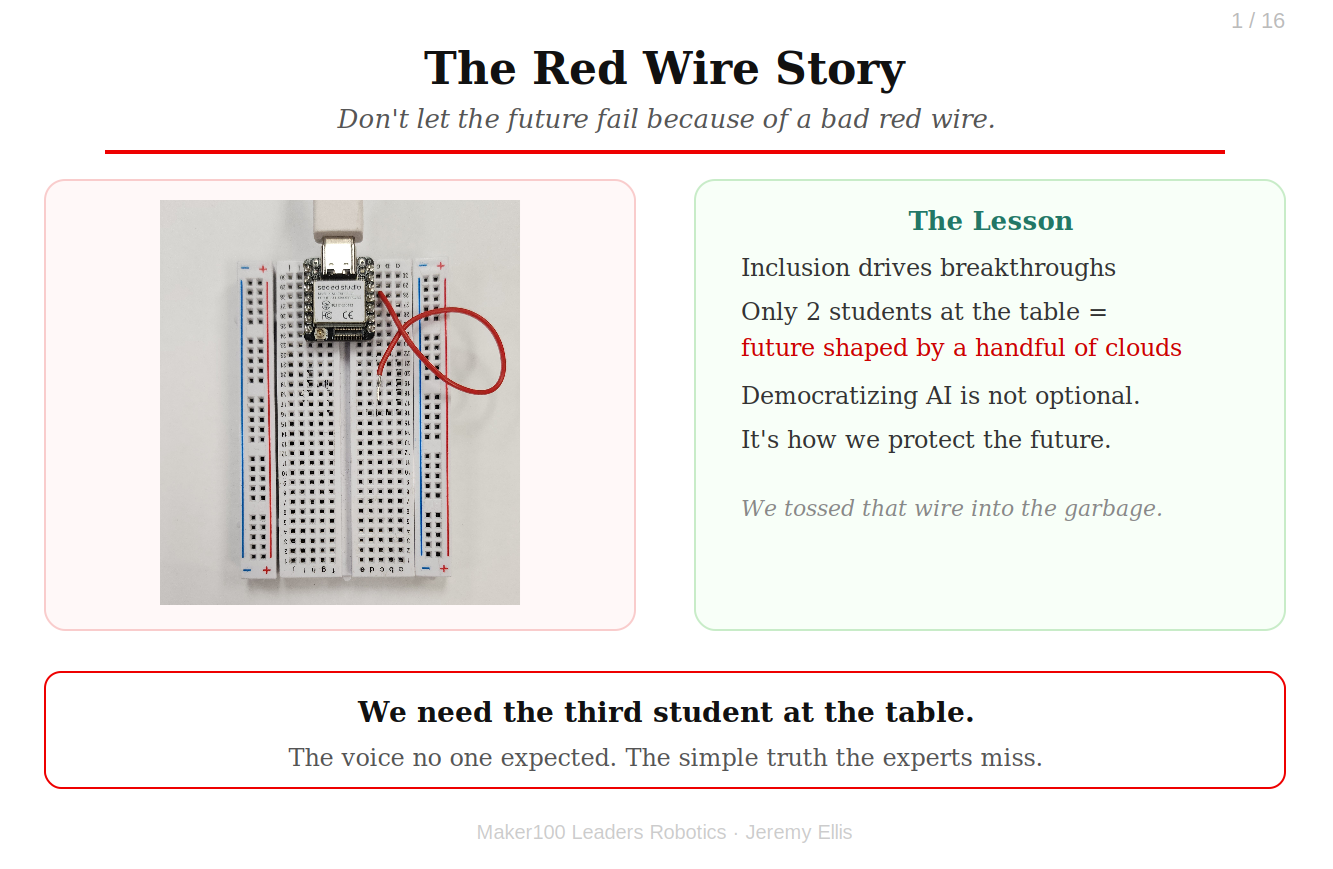
A three-person team was falling apart over their final project.
A robot arm with IoT sensors and a tiny vision ML loop. The leader was capable. The pre-engineer was meticulous. And the system kept failing. Then the third student, quiet, barely passing, spoke up: "What if the red wire isn't working?" The pre-engineer sighed: "That is an easy test." He swapped it. The robot came alive, smooth, stable, perfect.The breakthrough came from inclusion. From the voice no one expected to matter. Now imagine a world where only a handful of cloud companies decide how we solve society's hardest problems. That's a world with only two students at the table. Democratizing AI isn't optional. It's how we keep the future from failing because of a bad red wire.
We held a small ceremony that day, and tossed that red wire straight into the garbage.
2
Course Pilot
Six Schools, Six Countries, $200 per student.
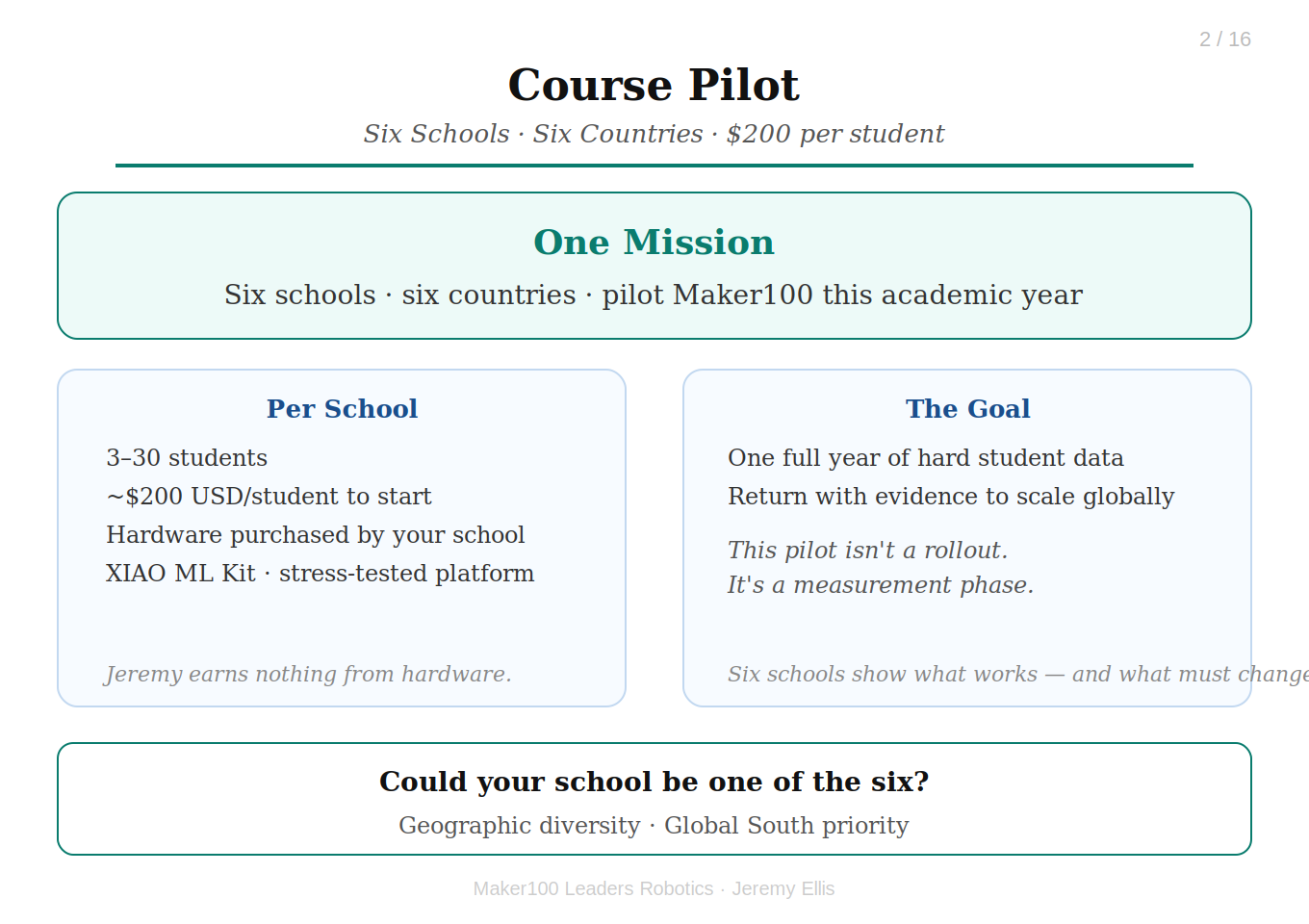
I'm here with one mission:
Six schools, from six different countries, to pilot Maker100 Leaders Robotics this academic year. Three to thirty students per school. Hardware cost: ~$200 USD per student plus tax, import duties and shipping for the XIAO ML Kit and supporting components, purchased directly by your school. I make nothing from the hardware, but I only support the platform I've stress-tested for years in my own classroom.The goal: gather hard student data over one full year, then return to a stage like this with the evidence needed to scale globally.
3
Who Am I
I don't teach leaders. I put students in situations where they discover they are a leader.
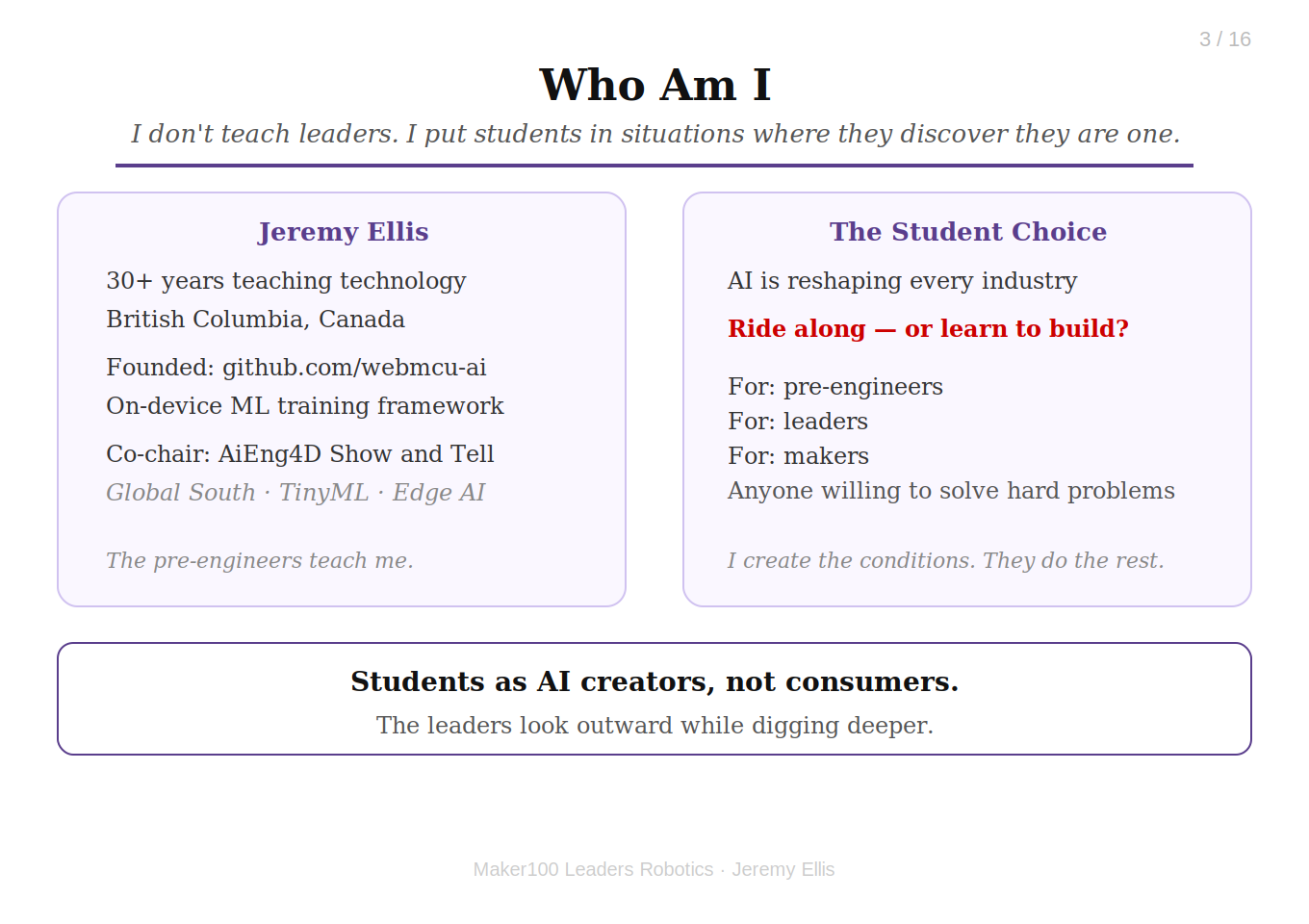
I am Jeremy Ellis. I have taught technology for over 30 years in British Columbia, Canada.
I founded the Github Organization webmcu-ai, a framework for fully on-device ML training, and I co-chair the AiEng4D Show and Tell, where Global South university students present TinyML and Edge AI projects. Students see AI reshaping every industry. They have a choice: ride along with tools built by others, or learn how those tools work and become the people who build what comes next. This course is for pre-engineers, leaders, and makers, anyone willing to solve hard problems. The pre-engineers teach me. The leaders look outward while digging deeper. I just create the conditions. 4
The Course: Maker100 Leaders Robotics.
Open source, free, and always updatable at github.com/hpssjellis/maker100-leaders-robotics
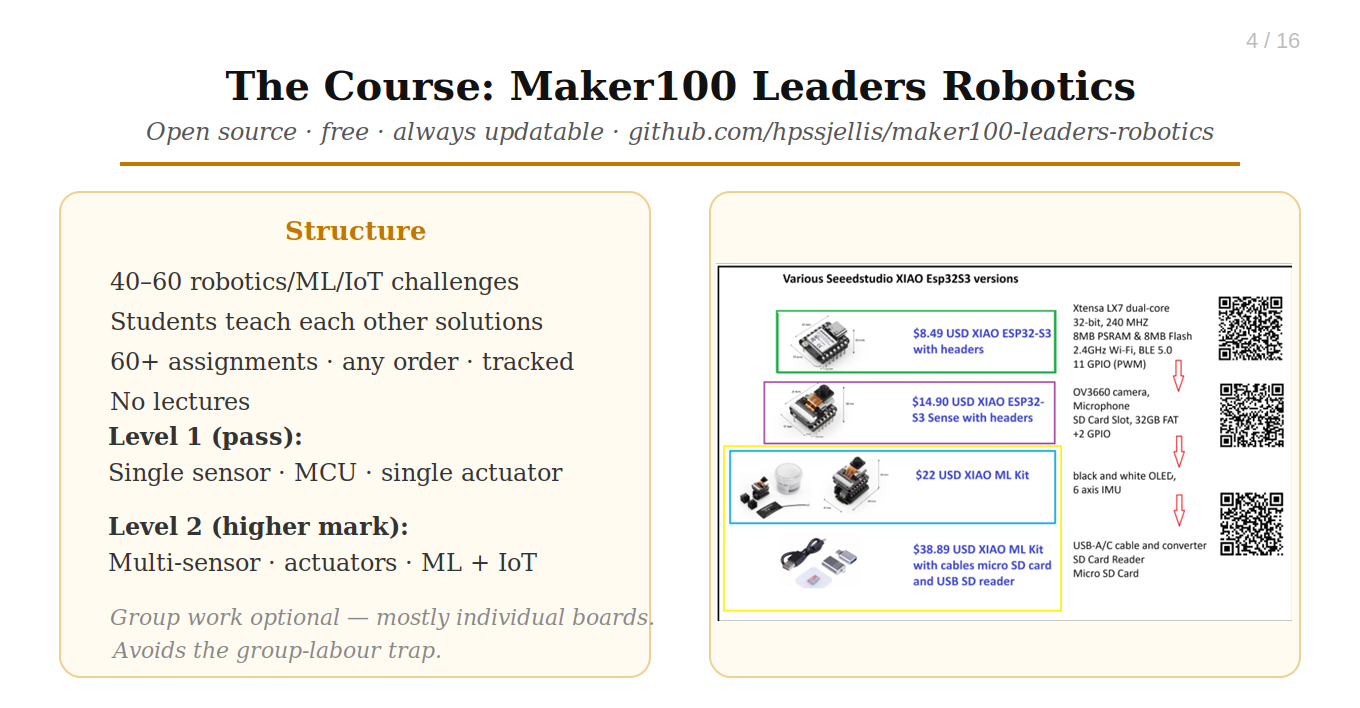
This is not an easy course. That is the whole point.
During Maker100 Leaders Robotics students solve 40–60 robotics, ML, sensor, actuator, and IoT challenges, then teach others their solutions. No lectures. All 60+ assignments are tracked on a public or private chart, completed in any order. Then they complete: A level 1 final project (course pass): single sensor, MCU, single actuator And a level 2 final project (higher mark): multiple sensors/actuators with Machine Learning and/or IoT Group work is optional and often teacher-assigned. For most of the course, students work collaboratively but on their own hardware, avoiding the group-labour trap where one student codes while another just wires. 5
The Rule of Lead Three
Learning is Collaborative
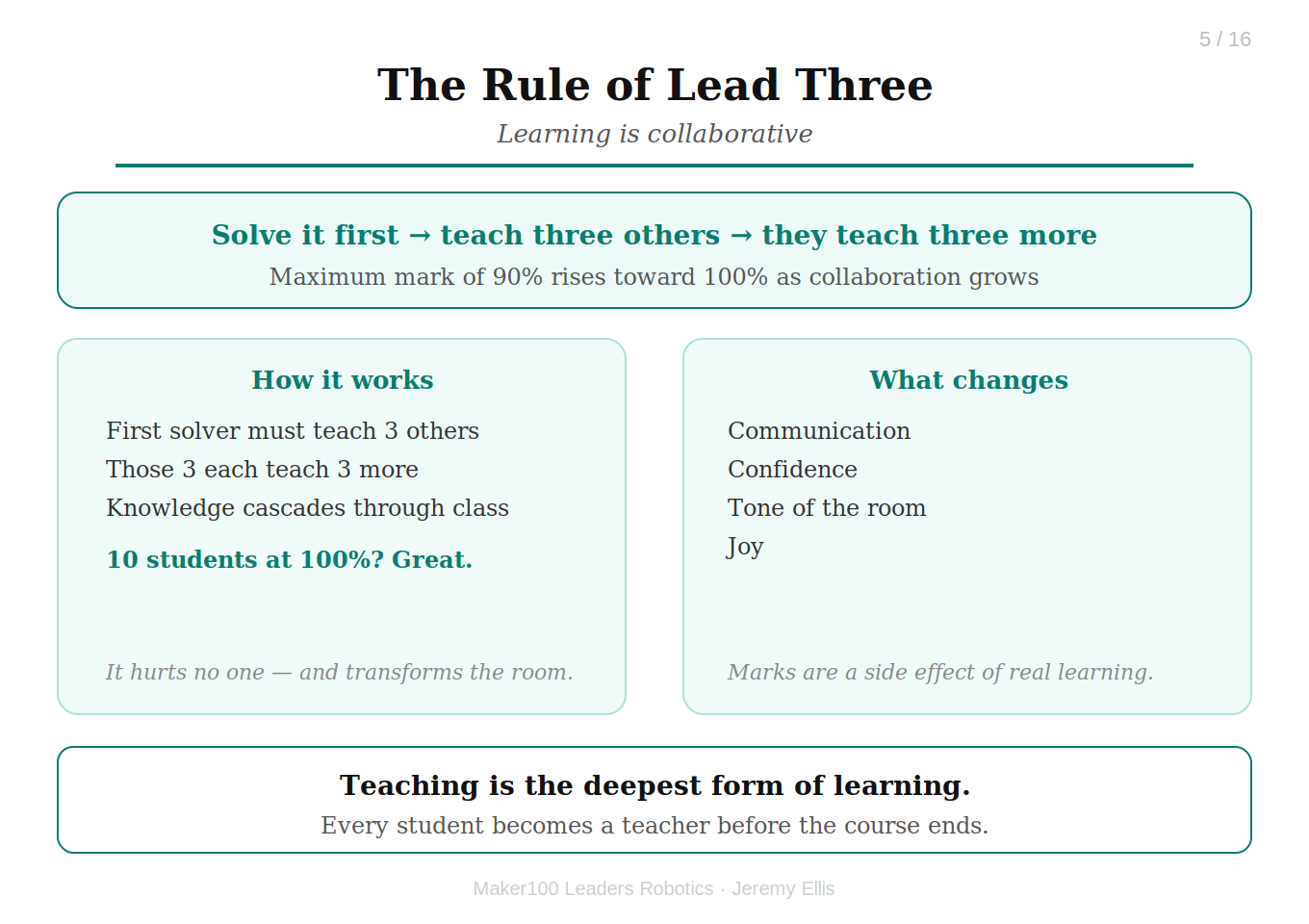
If you are the first person to solve an assignment, you must teach three others.
The Rule of Lead Three is that those students who solve a problem teach three others, who then teach three more. The maximum mark of 90% rises toward 100% as classroom collaboration increases.I'm completely comfortable with ten students earning 100%. It hurts no one, and it transforms the tone, communication, confidence, and joy of the room.
6
The Analog Firewall
Handwritten Code Summarizies and drawn Circuit Diagrams Checked
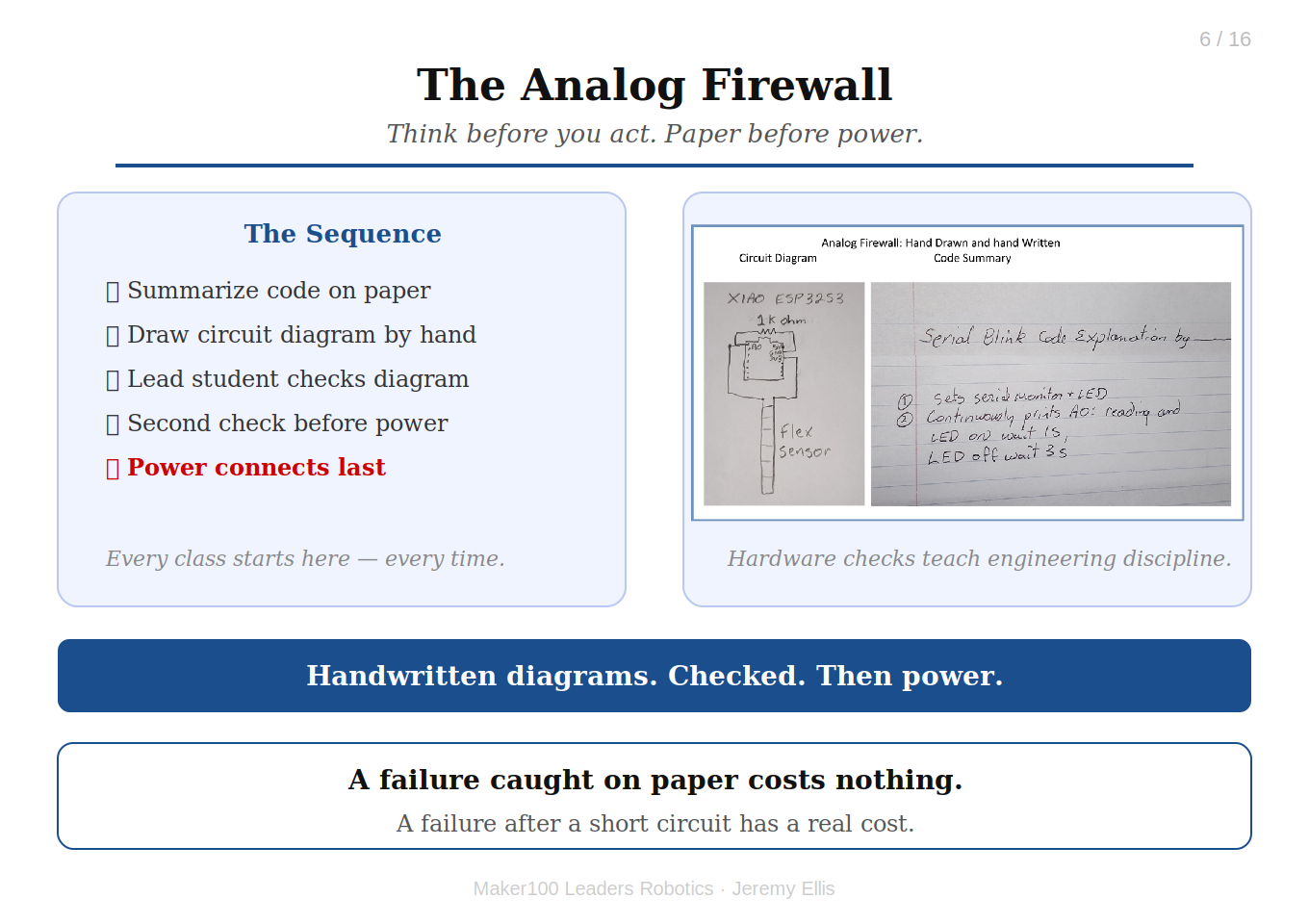
Think before you act. Paper before power.
The Analog Firewall: The class always starts here: Code is summarized on paper before loading onto the microcontroller Circuit diagrams are drawn by hand and checked by a lead student before wiring Power connects only after a second check A hardware failure caught on paper costs nothing. A failure after a short circuit has a real cost. 7
On-Device Machine Learning
Demo WebMCU-AI: The Full Machine Learning Pipeline on a $8-$22 USD Microcontroller
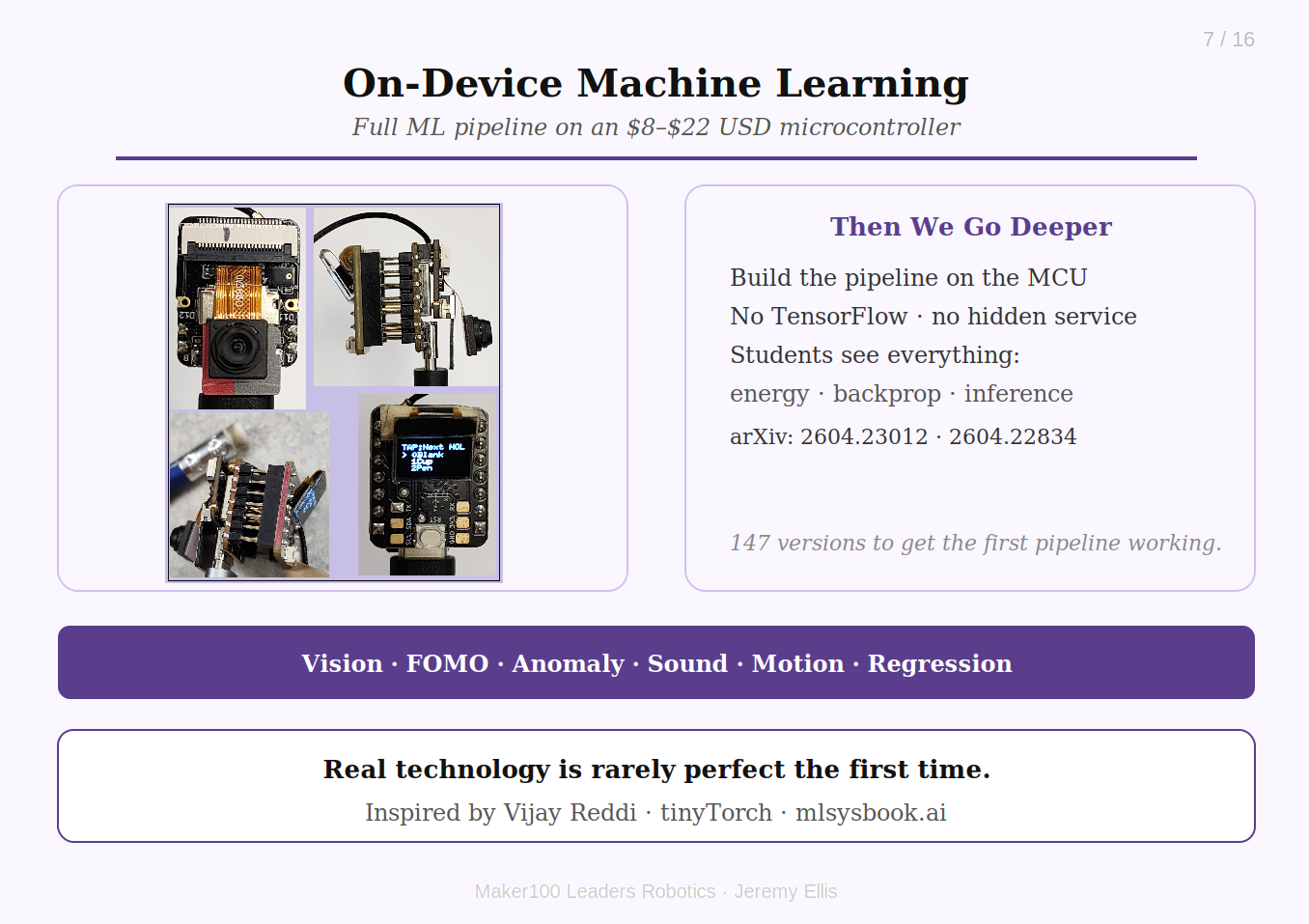
A common industrial TinyML workflow is:
Collect data, train in the cloud, deploy to edge, and that is still taught here. Students use Edge Impulse and SenseCraft to experience the industry approach.Then we go deeper: what if students build the entire pipeline themselves, on the microcontroller, from mathematical foundations? No TensorFlow. No hidden training service. Students see everything: energy use, data collection, backpropagation, optimization, inference.
Inspired by Vijay Reddi's tinyTorch and mlsysbook.ai, I adapted that philosophy into Arduino-compatible code, with help from LLMs. ArXiv Papers: 2604.23012 & 2604.22834
Working pipelines: vision classification, FOMO object detection (XY), anomaly detection, sound classification, motion classification, regression inference.
The first WebSerial training system took 147 versions. Real technology is rarely created perfectly the first time.
8
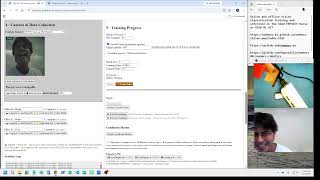
WebSerial Vision Classification
Demo: WebSerial Vision Classification
▶
9
Local AI and Why It Matters. LLMs as lab assistants
You are already using AI assistants.
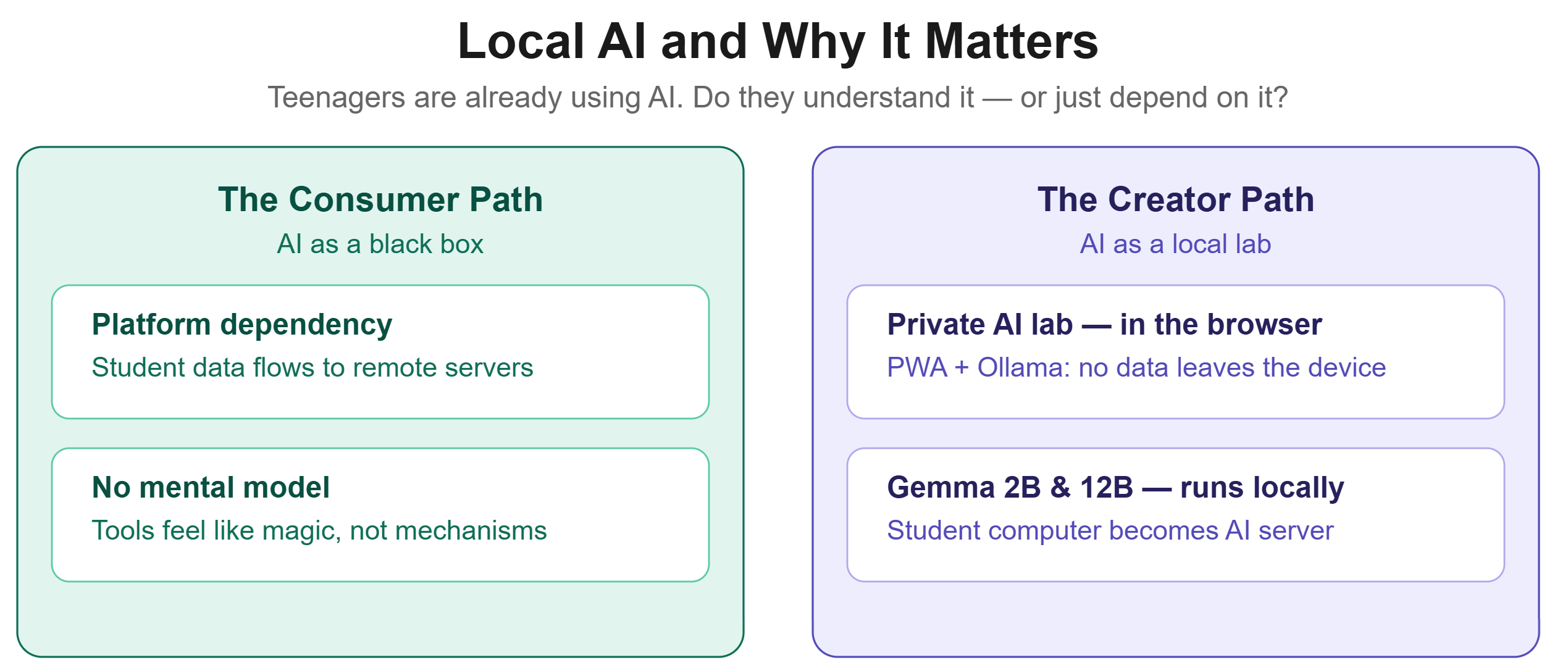
The question is whether they understand these tools, or become dependent on them.
Why not run an LLM locally, as a Progressive Web App? A student's computer becomes a private AI lab assistant, no student data sent anywhere. Privacy alone makes this worth doing. But the deeper point: if students only experience AI through a few enormous platforms, they become consumers of tools they don't understand. Putting AI tools in classrooms everywhere lets more students become creators. 10
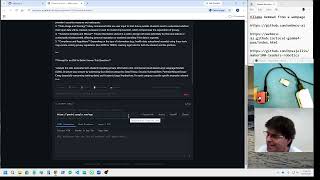
Offline Ollama running Gemma4:12B from PWA webpage
Demo: Ollama from PWA webpage. Needs Ollama.com installed
▶
11
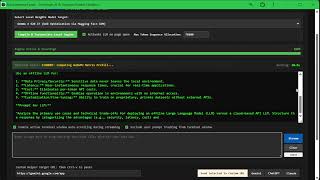
Offline Gemma4 from webpage PWA Directly
Demo: Gemma4 from PWA webpage only
▶
12
What I Learned From Stepping Back.
In 30 years of teaching I had never had a student win a large scholarship. Then I took a semester off.
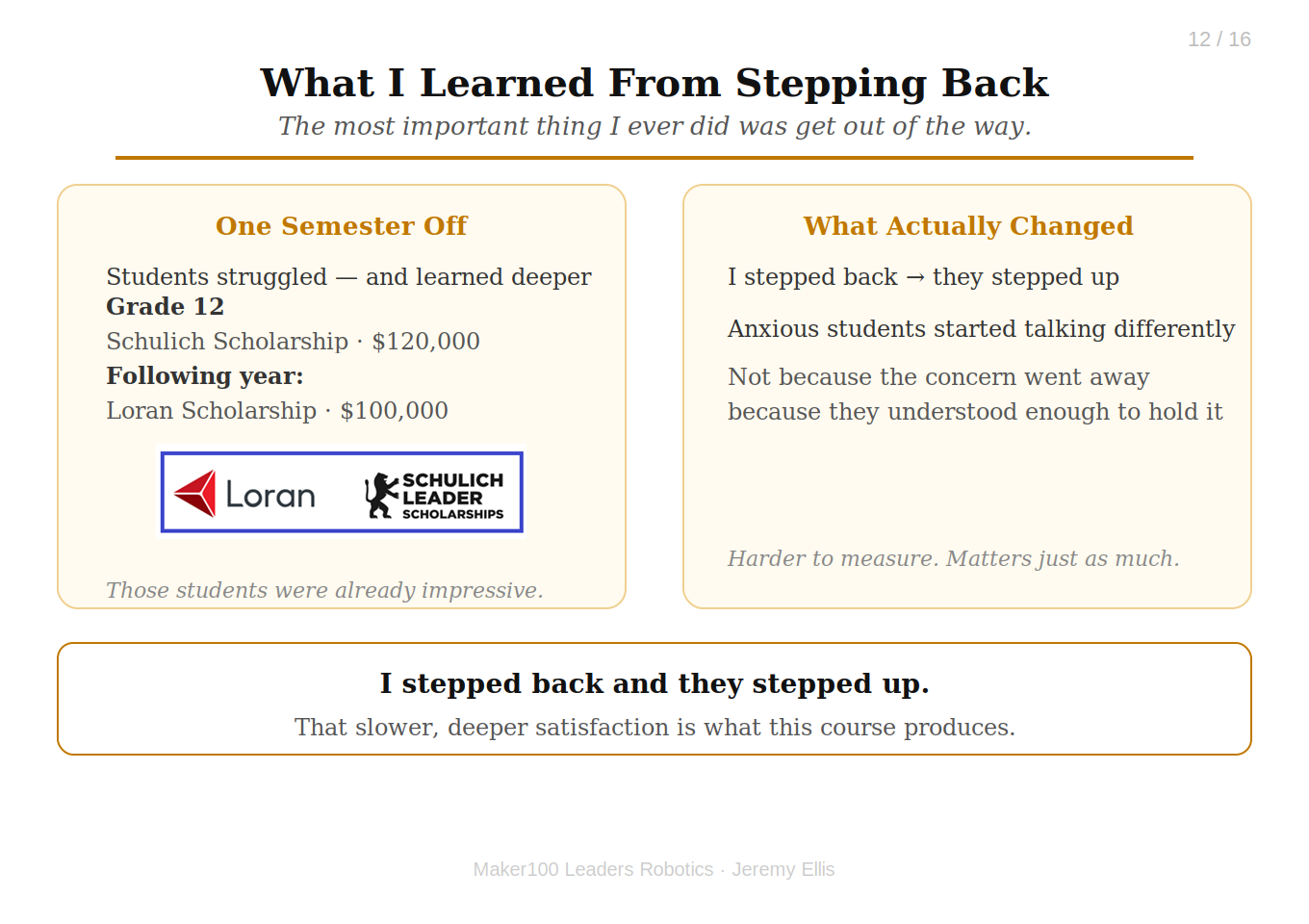
The most important thing I ever did was get out of the way.
Last year I took a semester off. Students struggled, and learned deeper. From that class: a grade 12 girl won the Canadian National Schulich Scholarship for $120,000, and the following year a boy, from the same class, won the Canadian National Loran Scholarship for $100,000. Those students were already impressive, I'm not claiming the course made them.What surprised me was what changed when the teacher stopped being the center of learning. I stepped back and they stepped up. But that wasn't the only thing I noticed. Students who had been quietly anxious about AI, about their futures, about being replaced, started talking differently. Not because the concern went away. Because they understood enough to hold it steady. That's harder to measure than a scholarship. But I'd argue it matters just as much.
13
Teachers matter.
Just differently in year one.
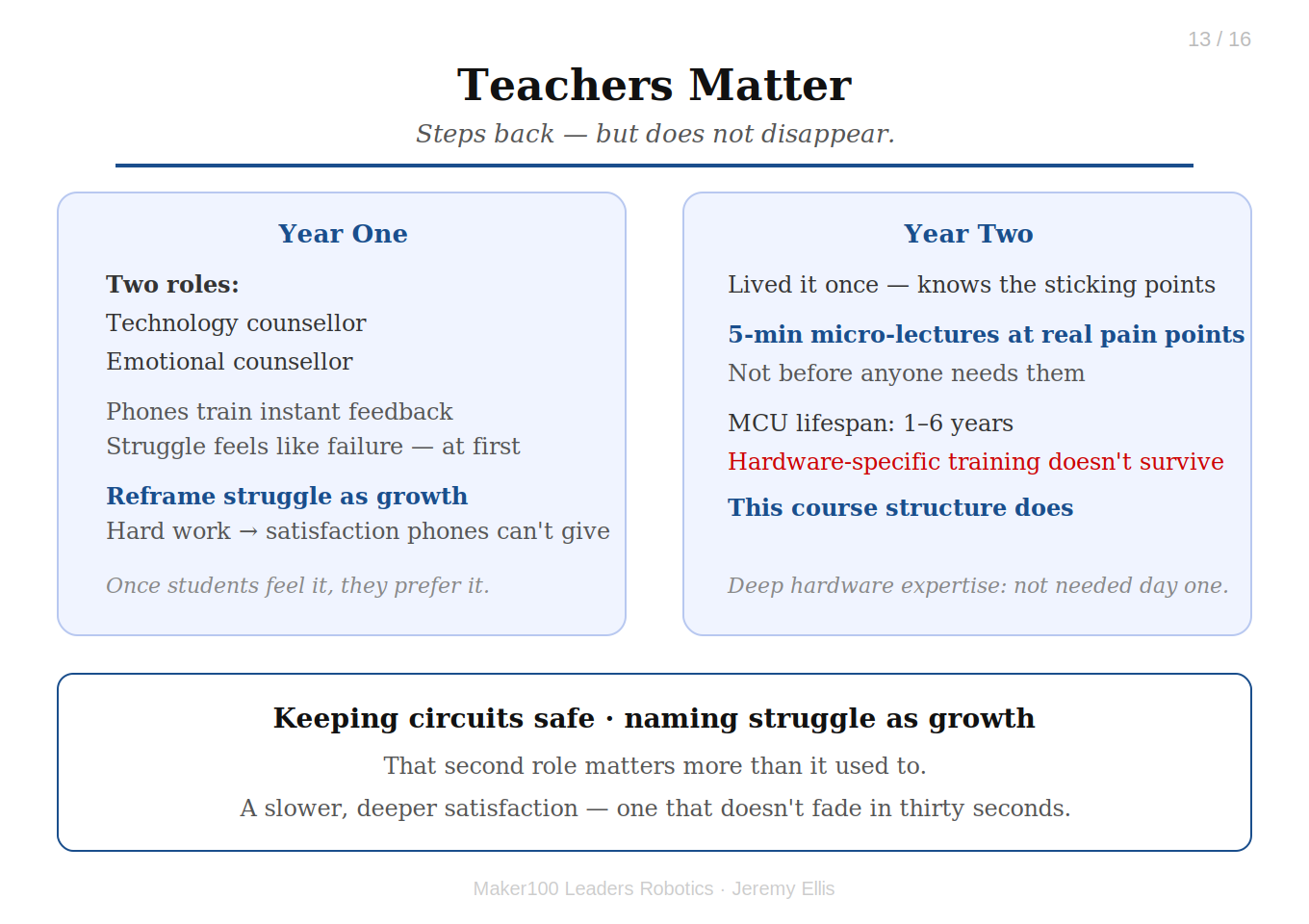
The teacher, steps back, but does not disappear.
In year one, the teacher is a technology counsellor and an emotional counsellor, keeping circuits safe and naming struggle as growth. That second role matters more than it used to. Students arrive wired for instant feedback, phones rewarding every tap with dopamine. Struggle feels like failure at first. The teacher's job is to reframe it, to help students discover that solving something genuinely hard produces something phones never can: a slower, deeper satisfaction that doesn't fade in thirty seconds. Once students feel that, they start to prefer it.Deep hardware expertise isn't required on day one. Microcontrollers have a one-to-six year lifespan before something better and cheaper arrives; heavy training tied to specific hardware doesn't survive a hardware generation. This course structure does. By year two, the teacher has lived it once. They know exactly where students get stuck, and that becomes precise five-minute micro-lectures placed at real pain points, not lectures delivered before anyone needs them.
14
The Pilot Proposal
Your first leadership challenge is funding.
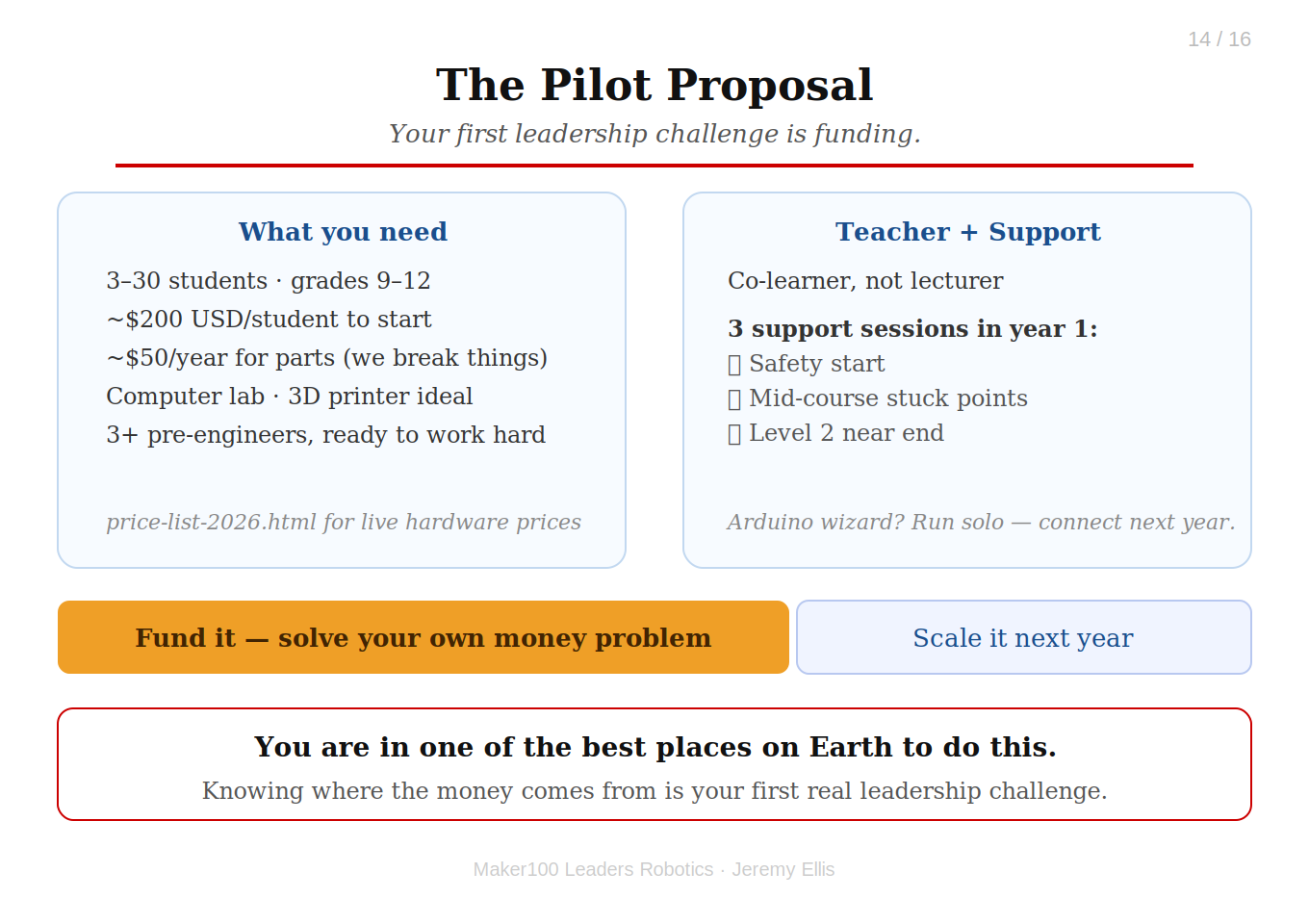
You are in one of the best places on the planet to do that.
What you need: At least three pre-engineers each semester willing to work hard3–30 students, grades 9–12
~$200 USD/student + tax + shipping to start; ~$50/year for replacement parts (yes, we break things)
A computer lab, ideally with a 3D printer
A teacher sponsor willing to co-learn, not lecture
I support each class three times during year one: at the start for safety, midway when students hit unsolvable problems, and near the end for Level 2 challenges.
Teachers who are Arduino wizards with an Edge Impulse login may want to run independently and connect next year.
Hardware price list: https://hpssjellis.github.io/maker100-leaders-robotics/price-list-2026.html
15
Closing
In one year, we meet again.
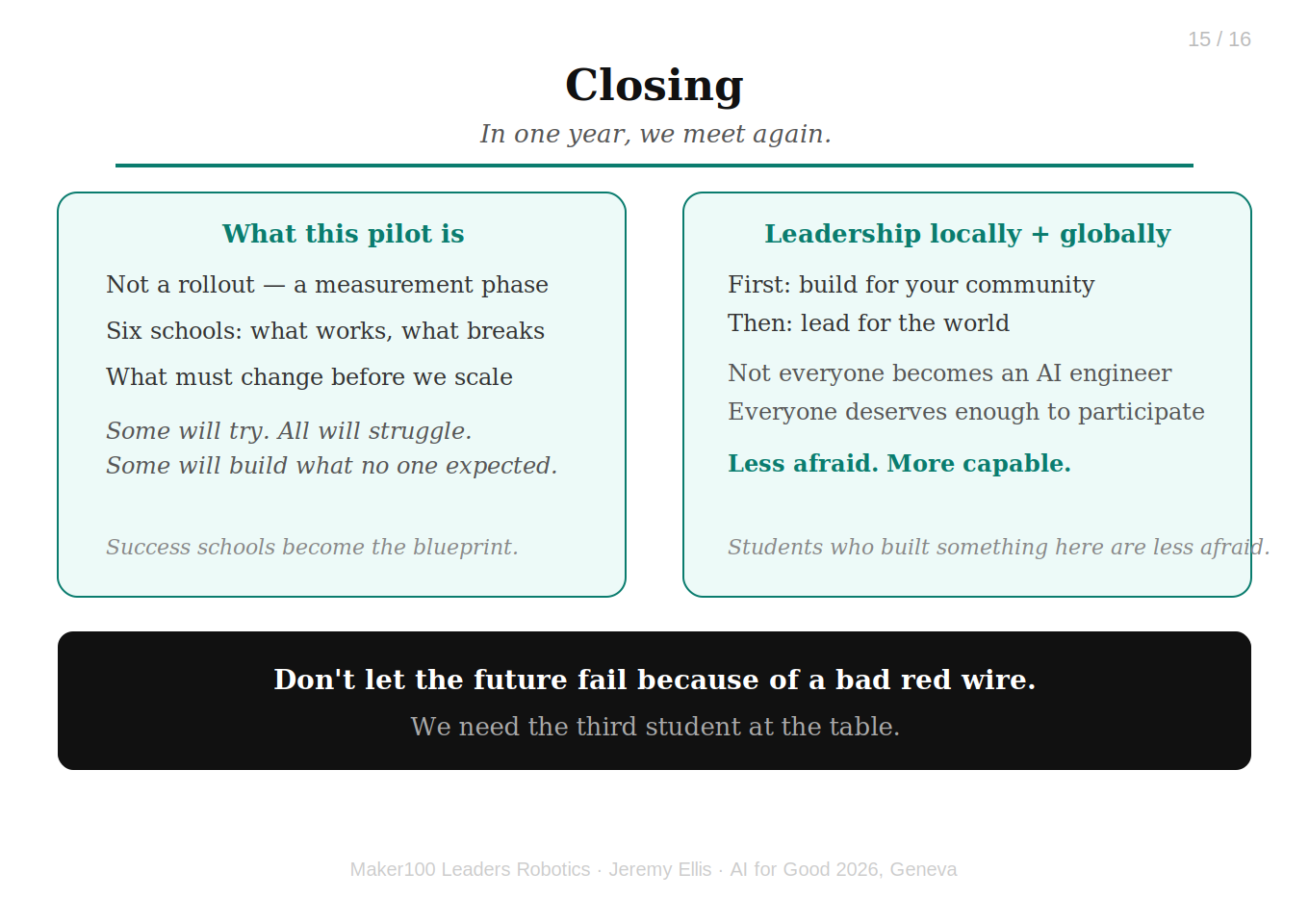
Leadership locally and Globally
Some schools will have tried. All will have struggled. Some students will have built things none of us expected. This pilot isn't a rollout, it's a measurement phase. Six schools show us what works, what breaks, and what must change before we scale. The schools that succeed don't just celebrate their own wins; they become the blueprint to raise funds for those who couldn't start today. First, you build for your community. Then you lead for the world. We need the third student at the table. The voice no one expected. The person who sees the simple truth the experts miss. I'm not arguing everyone becomes an AI engineer, I'm arguing everyone deserves enough understanding to participate in the future. The students who built something here aren't just more employable. They're less afraid. Don't let the future fail because of a bad red wire. Thank you. 16
Links and Resources
Everything is open source and free.
QR code to this presentation:
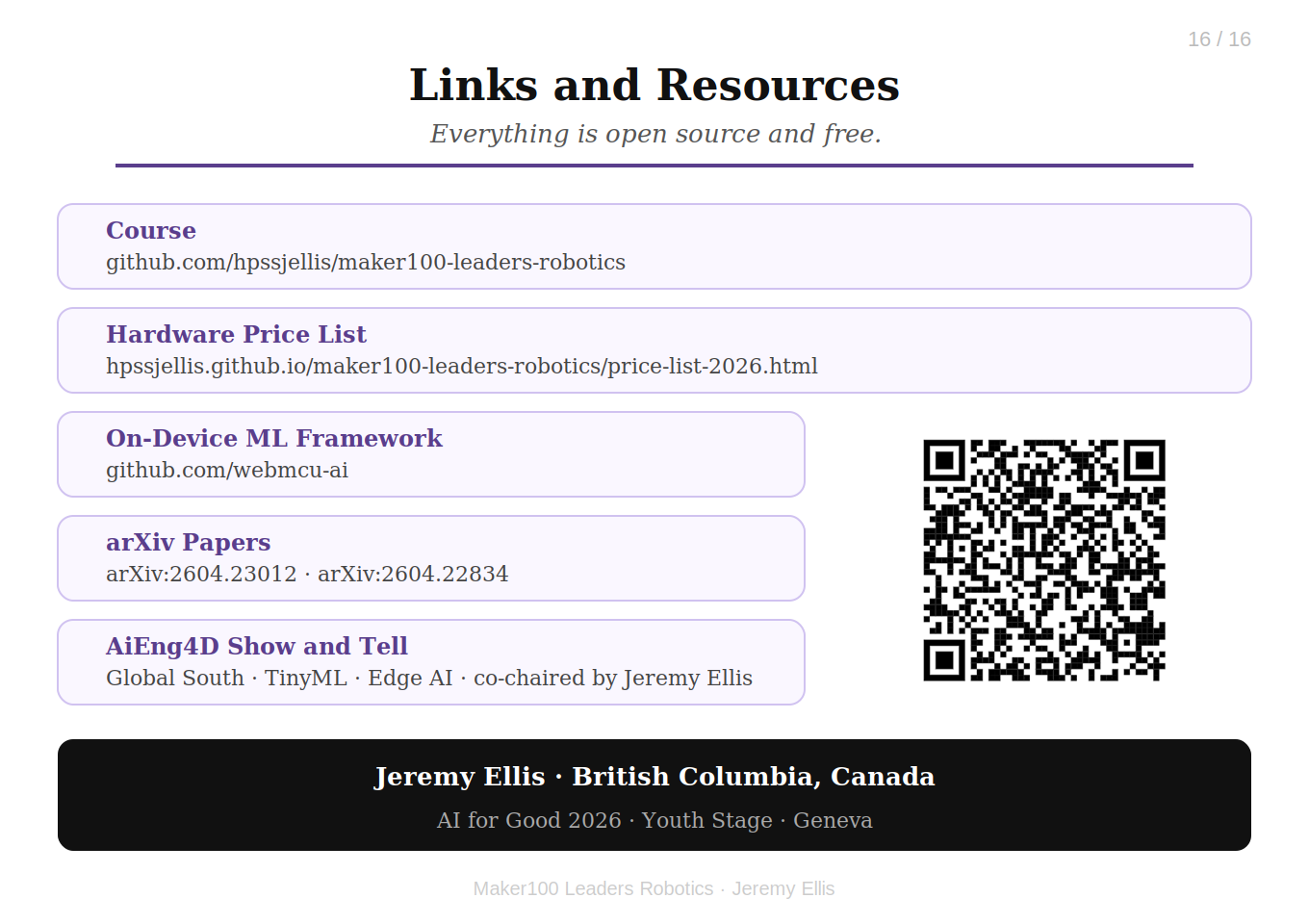
Resources
.| Resource | Link / Details | Comments |
|---|---|---|
| Author | Jeremy Ellis LinkedIn Profile | |
| GitHub Profile | github.com/hpssjellis | |
| On-Device webmcu-ai | github.com/webmcu-ai | arXiv Papers: 2604.23012 & 2604.22834 |
| WebSerial Vision Demo | webmcu-vision-pwa | On-device and webSerial Vision ML Training demo webpage and PWA |
| The Course | maker100-leaders-robotics | This is the course the students work through |
| The Curriculum | maker100-curriculum | This is the generic curriculum on Github |
| Hardware Price List | Hardware price-list-2026 | The bare essential hardware. |
| Local LLM PWA Small ~2GB | Gemma4:e2B PWA | Running as webpage PWAs |
| Local LLM PWA Large ~7GB | Ollama Gemma4:12B PWA | Needs Ollama installed |